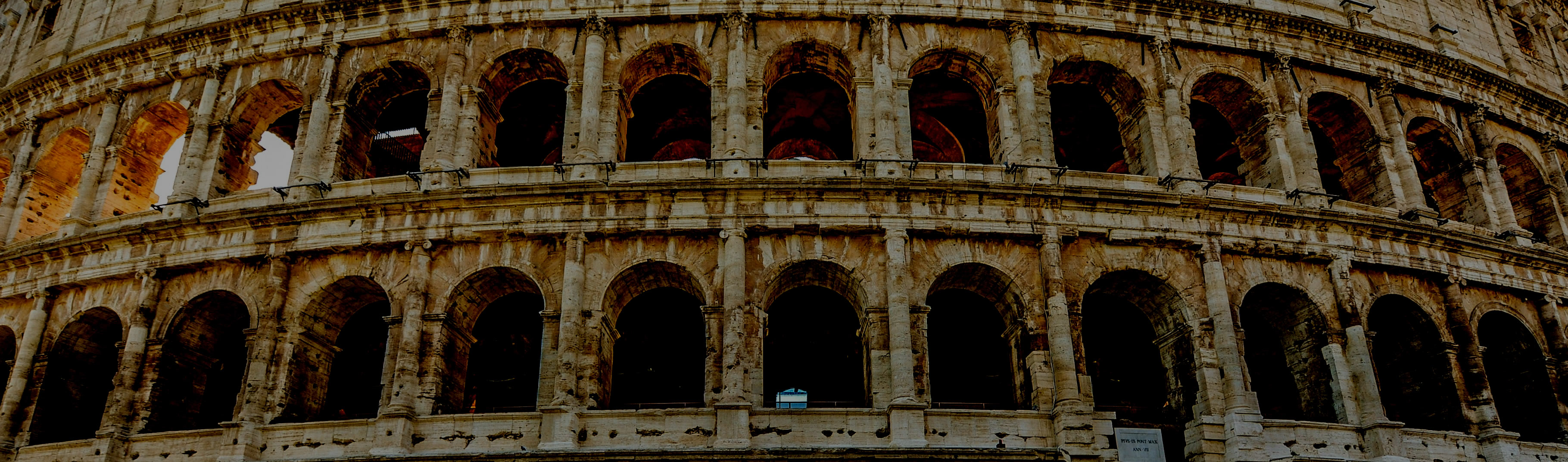
Christianity is now the religion of over two billion people across every populated continent. Still, the faith began as a small movement in the city of Jerusalem in the Roman province of Judea. Jerusalem is a city on the eastern coast of the Mediterranean Sea in the modern nation of Israel. Most of the people who lived in and near Jerusalem during the reign of Caesar Augustus were Jews who believed in one God. This was unusual because at that time, most Romans were polytheists. Polytheists are people who believe in many gods.
The Romans allowed the Jews to practice their faith and did not force the Jews to worship Roman gods. About 30ce, a Jewish holy man named Jesus began to attract a following in Jerusalem. Jesus’ followers came to believe that Jesus was the son of the God of the Jews and that he performed miracles. The followers of Jesus angered Roman authorities because they refused to follow Jewish or Roman laws. The authorities arrested and executed Jesus by nailing him to a cross. This form of execution is known as crucifixion. Three days after his death, Jesus’ followers said they saw him risen from the dead.
The followers of Jesus called him Christ. Christ is a Greek word that means “chosen one,” because his followers believed God chose Jesus to be his messenger. In time, the followers of Jesus separated from the Jewish community in Jerusalem and became known as Christians. The Christians taught that people’s sins would be forgiven if they became Christians. Their message was not successful with many Jews, but many polytheists throughout the Roman Empire responded to the idea of Christian salvation.
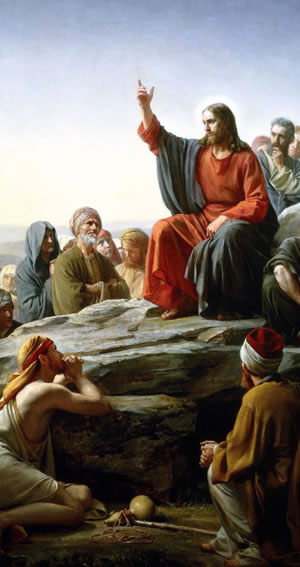
Sermon_on_the_Mount
Carl Bloch’s Sermon on the Mount (1880) depicts Jesus preaching his moral philosophy to his followers as described in the Gospel of Matthew.
Many passionate believers carried the message of Jesus throughout the Roman Empire. One of the most successful was a Greek-speaking Jew named Saul of Tarsus, known to Christians as Saint Paul. As a young man, Paul helped to persecute Christians, but one day, shortly after the crucifixion of Jesus, Paul had a vision in which he believed Jesus spoke to him from heaven. Paul spent the rest of his life writing about Christianity and winning new converts to the faith. Through the persistence of Paul and other Christian writers, small Christian communities developed throughout the Roman Empire.
The first Christians believed that Jesus would quickly return to earth and saw no need to create written records of his life. About fifty years after the crucifixion of Jesus, Christians combined the stories of the life and wisdom of Jesus into four books known as the Gospels. Gospel means “good news.”
The Bible is the holy book of Christianity; it consists of the Old Testament and the New Testament. The Old Testament was written long before the time of Jesus; it contains the sacred writings of the Jewish people. The New Testament includes the Gospels, along with letters by Paul and other Christian writers. The Bible has been translated into more than 1,500 languages and read by more people than any other book.
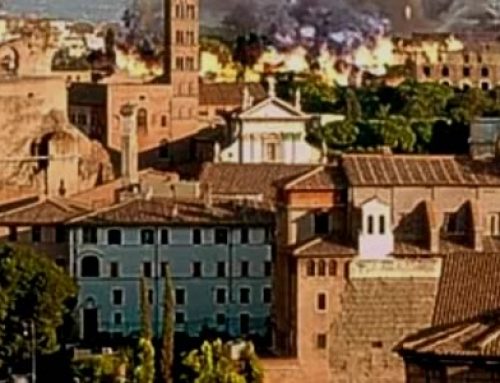
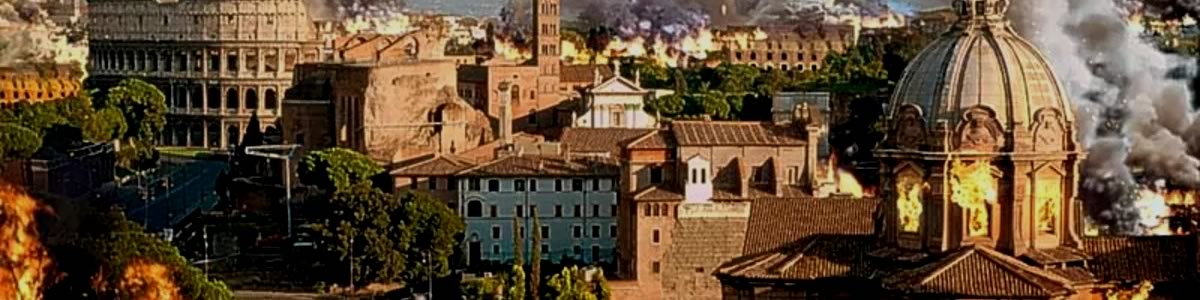
At first, the Romans did not mind that Christians did not worship Roman gods. The Roman Empire was prosperous, and there were not many Christians. Emperor Nero began persecuting Christians in 64ce. Nero blamed Christians for causing a fire that burned for more than five days and destroyed much of Rome. Within the next two hundred years, barbarian warriors attacked the empire. Many Romans suggested that the Roman Empire was experiencing bad times because a growing group of Christians did not worship the Roman gods.
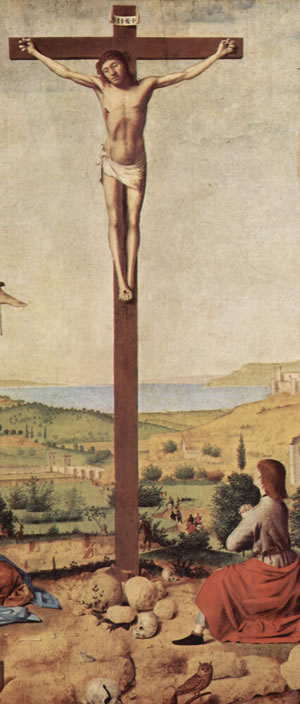
Crucifixion_of_Jesus
The Crucifixion of Jesus as depicted by Antonello da Messina (1454-1455)
Roman emperors became increasingly intolerant of Christianity. In 202ce, Emperor Septimius Severus banned any Roman citizen from converting to Christianity or Judaism. Those who disobeyed the emperor were often tortured by soldiers or forced to fight wild animals at sporting events. Despite the persecutions, Christianity continued to grow.
Emperor Constantine ended persecution of Christians when he seized power in 306ce. Four years later, Constantine made Christianity legal throughout the Roman Empire. A legend says that on the eve of a battle, Constantine saw a Christian symbol in the sky with words translating to “By this sign you shall conquer.” Constantine never went as far as establishing Christianity as the official religion of the empire, but he did encourage its growth.
While Constantine supported the church, he continued to worship Roman gods. In 337ce, Constantine was dying. Only then did the emperor call for a bishop so that he could be baptized, or officially admitted into the Christian Church. Fifty years after Constantine’s death, Christianity became the official religion of the Roman Empire.
Resources
Download this lesson as Microsoft Word file or as an Adobe Acrobat file.
View a Powerpoint presentation of this lesson.
Listen as Mr. Dowling reads this lesson.
Lexile Measure 1040L
Mean Sentence Length 15.49
Mean Log Word Frequency 3.42
Word Count 759
Mr. Donn has an excellent website that includes a section on Ancient Rome.
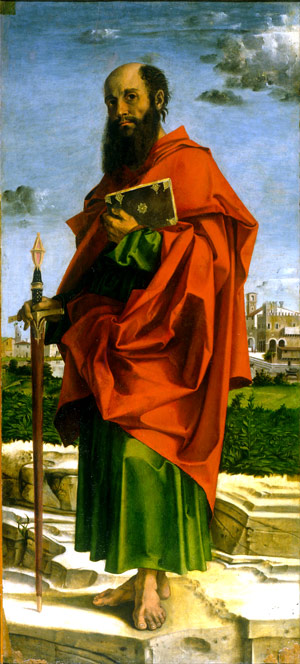
Paul_of_Tarsus
Paul the (c. 5CE – c. 60CE) commonly known as Saint Paul or Saul of Tarsus spread the message to Christianity to cities in Europe and Asia Minor.